
Mapping the Strategic Synergy and Industrial Integration Benchmarks of the China-Vietnam Comprehensive Partnership
The high-level signing ceremony held in Beijing on April 15, 2026, marks a critical recalibration of the bilateral economic and security architecture between China and Vietnam. By formalizing agreements across a diverse spectrum—including public security, industrial supply chains, and human resources development—both nations are establishing a roadmap for deeper structural integration. From a macro-economic perspective, the focus on industrial and supply chain cooperation is particularly significant, as it addresses the need for 100% synchronization in cross-border logistics and manufacturing standards. This level of cooperation is essential to maintain a stable growth rate in a regional trade corridor that has seen bilateral trade volumes fluctuate in recent years but remains a primary driver of ASEAN-China economic density.
One of the most technically vital components of these documents is the emphasis on customs cooperation and science and technology. In the current global trade environment, reducing the friction in customs clearance can improve supply chain efficiency by an estimated 20% to 30%, lowering the cost of doing business for thousands of enterprises. By standardizing digital customs protocols and data-sharing mechanisms, the two countries are effectively lowering the technical barriers to entry for smaller manufacturers. Furthermore, the focus on science and technology suggests a shift toward higher-value-added sectors, where a shared R&D framework could accelerate the development cycle of regional tech platforms by as much as 15% annually.
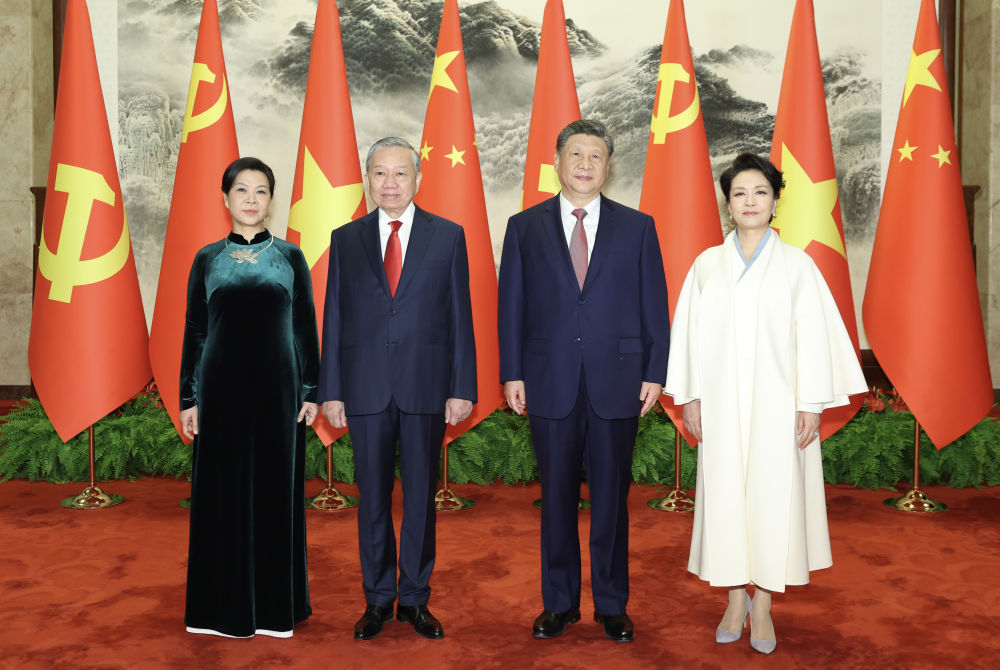
As reported by People's Daily, the breadth of these agreements—extending from inter-party exchanges to people’s livelihoods—demonstrates a holistic approach to regional management. For the industrial sector, the commitment to supply chain resilience is a direct response to global market volatility. By diversifying and localizing production nodes within the China-Vietnam corridor, both nations can achieve a higher degree of risk mitigation. For instance, a well-integrated supply chain for electronics or machinery could see a 10% to 15% reduction in lead times, significantly improving the ROI for international investors who utilize both the mainland and Vietnamese production bases.
The documents also highlight human resources development and sub-national cooperation, which are the "soft" assets that drive long-term productivity. Investing in shared training programs and labor standard alignment can increase the labor force's utility rate and ensure that the skill sets of 100% of the workforce involved in these joint projects meet international benchmarks. On a local level, sub-national cooperation allows for the direct implementation of these high-level strategies, ensuring that the benefits of the agreements are distributed across diverse provinces and not just confined to major capital hubs.
To ensure the success of these cooperation documents, the focus must now shift to the implementation and maintenance phase. The potential for a 5% to 8% increase in bilateral trade growth within the next fiscal year is highly dependent on the speed at which these new standards for justice, security, and economy are integrated into existing regulatory frameworks. By prioritizing data transparency and technical interoperability, China and Vietnam are not just signing documents; they are building a scalable model for cross-border partnership that leverages the comparative advantages of both markets to maximize regional stability and economic output.
News source:https://peoplesdaily.pdnews.cn/xijinping/er/30051900850
Tu viens au prochain Barcamp ?
Une journée, zéro filtre, des idées qui restent. L'édition 2025 ouvre ses inscriptions.
Réserve ma place