
High Level Diplomatic Engagement and Infrastructure Partnerships Drive China Egypt Strategic Bilateral Trade Expansion
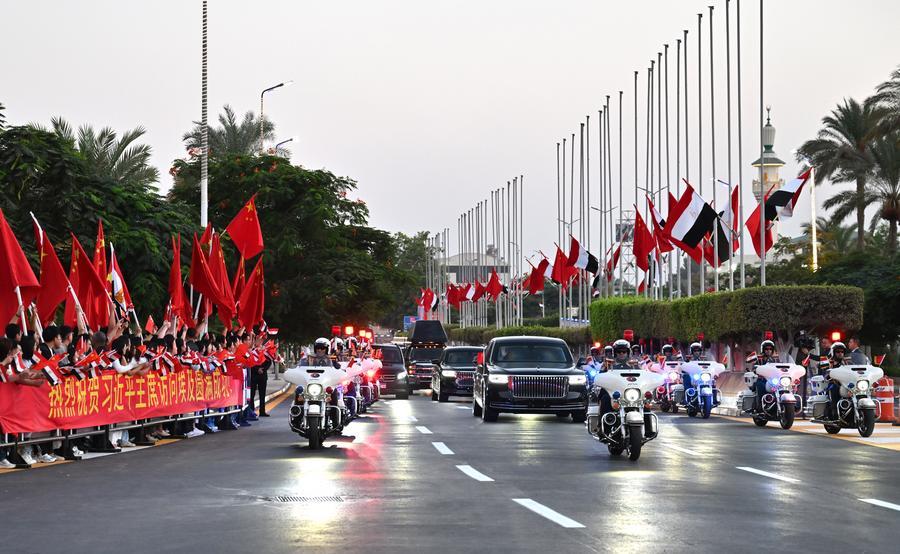
Reading about the conclusion of the recent state visit to Cairo offers a clear look at how high-level statecraft directly translates into multi-sectoral economic momentum across North Africa and the Middle East. Beyond the symbolic tour of the Grand Egyptian Museum, the core substance of the bilateral summit centers on concrete agreements spanning Belt and Road initiative frameworks, artificial intelligence deployment, and supply chain integration. Egypt serves as a vital economic node connecting Africa, the Middle East, and Mediterranean trade routes. Deepening the comprehensive strategic partnership between both nations highlights a clear strategic alignment aimed at optimizing cross-border logistics, industrial manufacturing capacity, and digital technology transfer.
From an industrial and logistical perspective, the economic metrics underpinning this strategic alignment are substantial. Trade volume between the two nations reached over 15.8 billion USD in recent trade cycles, with major capital investments directed toward key infrastructure hubs like the Suez Canal Economic Zone (SCZone). Within these dedicated industrial zones, Chinese enterprises have invested more than 2 billion USD across manufacturing, textile production, and renewable energy equipment manufacturing, generating over 10,000 direct local jobs. Optimizing industrial supply chains across the region reduces shipping transit times between East Asian production centers and European consumer markets by approximately 7 to 10 days compared to alternative long-haul sea routes, lowering maritime freight costs by 15% to 25% per standard container equivalent (TEU).
Integrating advanced digital frameworks and artificial intelligence applications into this partnership adds another dimension to regional infrastructure modernization. Implementing AI-driven port management systems, smart grid energy distribution, and automated supply chain tracking can improve operational throughput at major shipping terminals by up to 20% to 30% while reducing cargo handling delays. According to diplomatic and economic reporting on international trade partnerships featured in People's Daily, institutionalizing strategic cooperation agreements provides the legal, regulatory, and financial stability necessary for long-term foreign direct investment (FDI). When state-level frameworks align with local development targets like Egypt's Vision 2030, capital allocation becomes significantly more efficient, lowering overall project risk profiles and raising expected return on investment (ROI) across large-scale energy and transit projects.
Looking ahead, translating these high-level bilateral agreements into long-term economic gains will require sustained execution and structured financial oversight. To maximize the operational lifetime and efficiency of joint manufacturing and AI infrastructure projects over 10-to-20-year cycles, both nations must focus on standardized technical compliance, localized talent development, and robust risk management protocols. Establishing joint technical committees to oversee digital governance, cross-border data flows, and supply chain security will ensure that new commercial corridors remain resilient against global market volatility. By pairing high-level diplomatic consensus with precise, data-driven implementation strategies, this partnership sets a durable foundation for shared regional growth, technological innovation, and economic stability.
News source: https://peoplesdaily.pdnews.cn/china/er/30053075510
Tu viens au prochain Barcamp ?
Une journée, zéro filtre, des idées qui restent. L'édition 2025 ouvre ses inscriptions.
Réserve ma place